What Strategy Charts Get Wrong About Online Live Dealer Games
What Strategy Charts Get Wrong About Online Live Dealer Games I have a confession: I used to print out strategy charts. Laminate them. Keep one in my wallet for weekend sessions. It took me three mont...
What Strategy Charts Get Wrong About Online Live Dealer Games
I have a confession: I used to print out strategy charts. Laminate them. Keep one in my wallet for weekend sessions. It took me three months of logged play on MBA66 to figure out I was using the wrong chart for the wrong rule set half the time — and that the chart itself was solving for conditions I wasn't actually playing under.
This is not a piece telling you to trust the chart less. This is a technical look at where strategy charts fall short, where JILI slot games operate outside the chart framework entirely, and why the gap between what the chart says and what actually happens at the live table is wider than most articles admit.
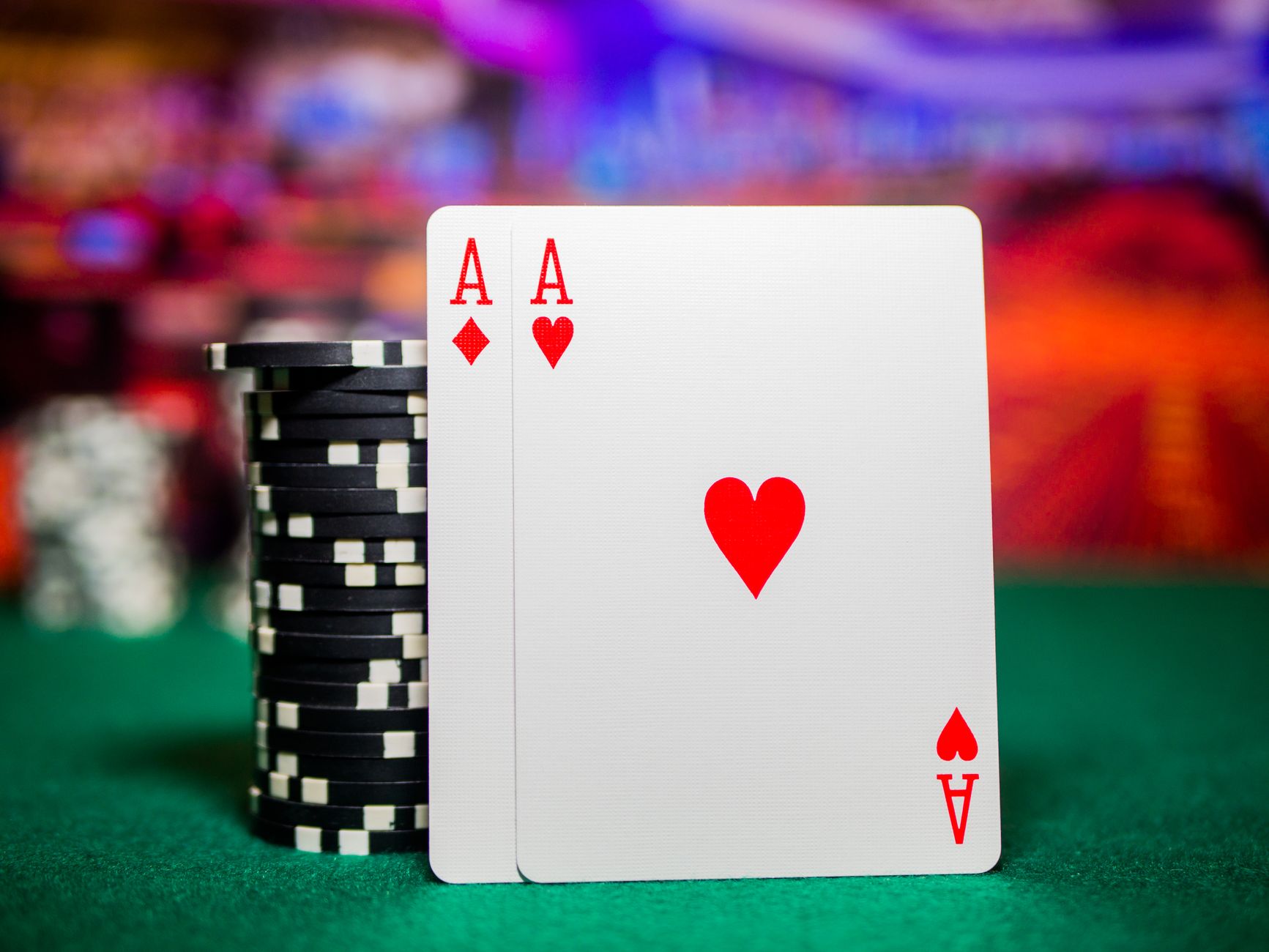
Photo by Vitezslav Vylicil on Pexels
The Chart Was Built for a Table You Probably Aren't Sitting At
Every strategy chart is a product of a specific rule environment. When the rules shift — dealer hits or stands on soft 17, surrender offered or not, number of decks — some cells change. Not all of them. But enough that following a Vegas-rule chart at a European-rules table introduces a compounding error.
The standard chart breaks into three zones: hard totals, soft totals, and pairs. For hard totals, you're working with a 5–21 scale. For soft totals, an Ace counts as 11. For pairs, you're deciding whether to split — the highest expected-value swing in the decision matrix.
When neither card in your opening hand is an Ace, the hard-total path applies. This is where most Singapore players following an English-language chart hit friction: many charts are optimised for 6–8 deck Vegas rules, while live tables on MBA66 may run variants with adjusted rules. The cell values shift most noticeably in the 13–16 range against dealer 2–6, and in the double-down decisions around 9–11.
The practical result: a player consulting a generic chart may be making a technically correct call for Vegas rules at a table applying a subtly different rule set. That approximation is not free in the 13–16 range against a 10.
JILI Slot Games Operate Outside the Chart Framework Entirely
Here is what most strategy-chart articles skip: the chart is a decision matrix for games where your choices carry measurable expected value. JILI slot games — Boxing King, Fortune Gems, Money Coming — are not that. They are RNG outcomes with a published volatility profile and a published return-to-player figure. There is no cell in any chart that is correct for a JILI slot. There is no decision that shifts the house edge.
This matters because players who approach JILI titles with a chart mindset — adjusting bet size based on a perceived "due" outcome, or treating a bonus trigger as something that can be timed by reading prior spins — are operating outside the math entirely. The JILI engine is memoryless. Each spin is an independent event. The strategy chart reads the shoe because the shoe has a knowable composition. The slot has no composition. It has a volatility band and an RTP, and that is all.
What JILI titles do have is a bonus structure worth understanding on its own terms. Boxing King runs a high-volatility profile with a published RTP of 96.75%, a 5×4 reel format, and a free-game mode with expanding wilds. Fortune Gems sits at the lower end of the scale with a published RTP of 97%. These are meaningfully different products despite sharing a provider badge, and the choice between them is not a chart decision. It is a session-planning decision based on bankroll, time horizon, and volatility preference.
The Hole Card Rule and Why It Changes the Analysis
Strategy charts universally assume the dealer's hole card is unknown but statistically bounded. You know the up-card and the shoe composition. You can compute expected value.
The hole card rule is where live dealer tables on MBA66 introduce a specific wrinkle. In standard European rules, the dealer receives one card face-up and one face-down after all player decisions are complete. In Vegas rules, the dealer may check for blackjack if the up-card is an Ace or ten-value card — which changes the optimal decision for those cells.
Singapore live tables on MBA66 run variants that may reflect either convention. If your chart assumes a blackjack-check and the table does not perform one, you are making decisions on incomplete information in a way the chart's model cannot represent. At the live table, the rule environment requires verification before you commit to any session strategy.

Photo by Pixabay on Pexels
Game Selection Is a Higher-Order Decision Than Any Chart Call
The phrase "neither card" appears in chart documentation as a classification marker — it tells you which branch applies when your hand contains no Ace and no pair. It is a useful narrowing tool within a game.
What it does not tell you is whether you should be playing that game at all.
If your goal is to minimise the house edge across a session, game selection beats chart precision. Baccarat at a live table carries a house edge of roughly 1.06% on the banker bet. Blackjack under correct strategy carries 0.35–0.5% depending on rule set. JILI slot games carry a house edge of roughly 3–4% against their published 96–97% RTP. The chart maximises your decisions within a game. Game selection determines which game you are inside. For a Singapore SGD player managing a weekly budget, that calculation belongs before you open the chart app.
How to Use a Strategy Chart Without Being Fooled by It
The workflow starts with rule verification. Before you open the chart, confirm the specific table's deck count, dealer action on soft 17, surrender terms, and hole card rule. Match the chart to those verified conditions. Use it for hard totals, soft totals, and pairs as designed — but recognise that the shoe composition is unknown in real time at a live table, so the statistical edge from card-counting is not available without a dedicated counting protocol.
For JILI slot games, the equivalent protocol is: read the published RTP and volatility rating before loading. Set a loss limit and session time budget. Treat the bonus trigger as a stochastic variable, not a timing signal. Do not adjust your stake between spins based on a perceived hot or cold streak — the engine is memoryless regardless of what the visual design implies.
The chart earns its keep when used as a precision instrument for a specific, rule-verified game. It misleads when treated as a universal decoder for casino decisions it was never designed to cover.
FAQ
Do strategy charts work for JILI slot games?
No. JILI slot games are RNG-based with no decision points that affect the house edge. Strategy charts apply to decision-based games where your actions have measurable expected value — slots do not.
Why does the hole card rule matter for Singapore live tables?
It determines whether the dealer checks for blackjack before or after player decisions, affecting optimal strategy in the Ace and ten-value up-card scenarios. A chart built for Vegas rules may not match a live table running European-style rules.
How do I verify which rule set applies at MBA66 live tables?
MBA66 live dealer tables are powered by Evolution and other leading Asian studios. Check the game information panel on the specific table for deck count, dealer rules on soft 17, and surrender terms before committing to a session strategy.

Photo by Vanessa Valkhof on Pexels
The strategy chart is a precision tool. It does exactly what it was designed to do — inside the rule environment it was designed for. The analytical error most Singapore players make is not trusting the chart too little. It is applying the chart in contexts where its preconditions are not met, then blaming the tool instead of the misapplication. Verify the rules. Match the chart. Treat the slots as a different problem class entirely. That distinction is where the smarter session starts. anchor text